What a Fox, Some Chickens, and a Hatch of Chicks Taught Me About Resilience
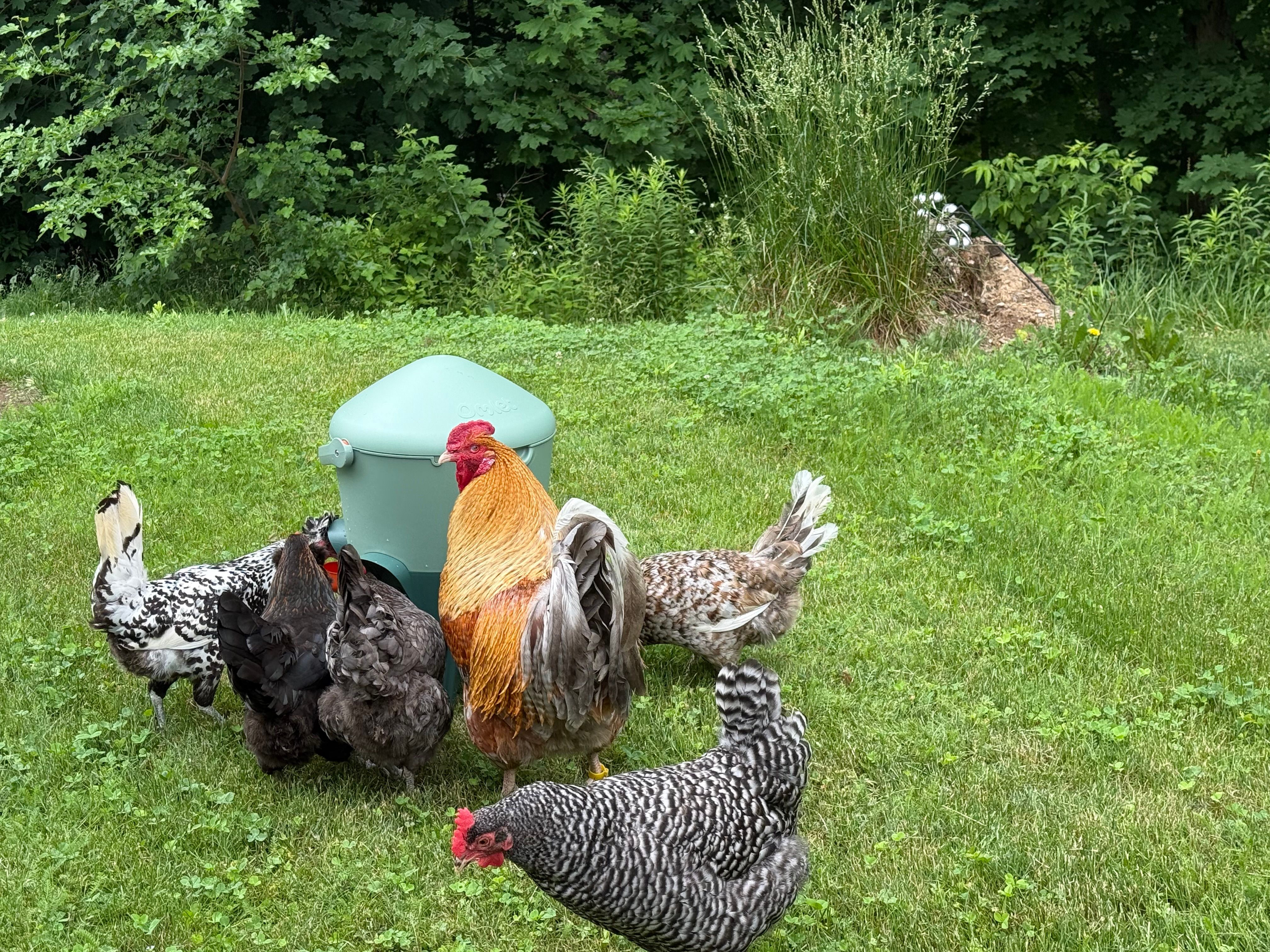
I have been keeping chickens for about three years. For those who know me personally, it won't come as a surprise how much I love them - I am an animal person.
What started as a curiosity a few years ago has become a genuine passion.
They're not livestock to me. They're pets and feel like family - my little feather babies.
Each one has a distinct personality. Some are bold, some are cautious, some are endlessly curious, and some are absolute drama queens. They follow me around the yard, come running when they see me, and make me laugh every single day.
One of my favourite parts of the day is opening their enclosure and watching them tumble out into the world as though it's the most exciting day of their lives.
There is something deeply grounding about sitting quietly and watching chickens scratch through the grass, dust bathe in the sunshine, investigate absolutely everything, and navigate their complicated little social lives.
Over time, I've become attached to them in much the same way people become attached to dogs, cats, or any other beloved companion animal.
So when a fox got into my flock a few weeks ago, it was devastating.
Within minutes, I lost my rooster, Raphael, and my beloved hen, Broom Hilda. My two favourite chickens.
Another hen survived only because I was able to startled the fox which then dropped her - I had to chase the fox away repeatedly as it was still going after her even though I was right there.
Several others disappeared into the woods in a panic.
What followed were hours of searching, listening, waiting, hoping, and trying to determine who was alive, who was injured, and who might still find their way home.
One hen that I was able to find, I wasn't able to catch as she was too scared to follow me and was in a group of thorny bushes. I sat quietly with her for 90 mins while getting eaten alive by black flies but I couldn't leave her as I would periodically hear branches snapping and knew the fox was nearby too.
And yet, as difficult as it was, I noticed something important.
I was devastated, but I wasn't falling apart.
I could still think.
I could still make decisions.
I could still care for the remaining birds.
I could still do what needed to be done.
I was anxious because there was something to be anxious about.
A fox had just killed two of my chickens.
My nervous system wasn't malfunctioning.
It was doing exactly what it was designed to do.
The difference was that fear wasn't running the show.
I wasn't frozen.
I wasn't spiralling.
I wasn't making impulsive decisions.
I was able to feel the fear without becoming consumed by it.
In the days that followed, I decided to incubate eggs.
Partly because I wanted to preserve genetics from birds I had lost.
Partly because I wasn't ready to let go.
Partly because I needed something hopeful to focus on.
What I didn't expect was how healing the process would become.
Each evening I candled eggs and watched tiny embryos develop.
I waited for pips.
I celebrated hatchings.
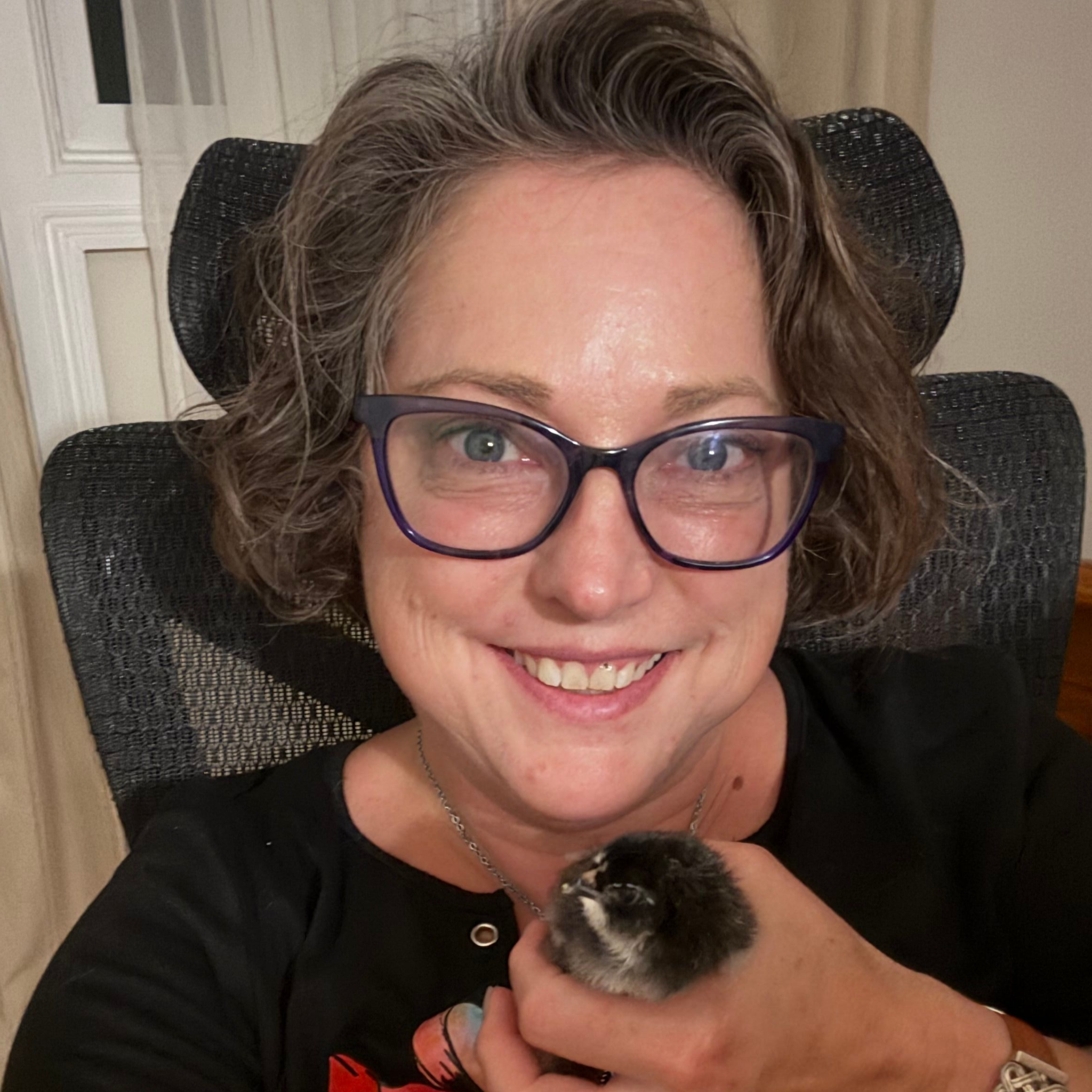
I watched tiny wet chicks emerge into the world.
The grief didn't disappear.
But alongside the grief, there was curiosity.
Wonder.
Excitement.
Hope.
The same heart that had broken open with loss was beginning to open again to joy.
Then came another challenge.
One of the chicks became shrink-wrapped during the hatch.
The membrane around the chick was drying and making it difficult for the chick to emerge on its own.
The problem was that there wasn't a clear answer.
If I intervened too early, I could cause bleeding and potentially kill the chick.
If I waited too long, I could also lose the chick.
There was no certainty.
No obvious right answer.
Just observation, patience, and ongoing assessment.
I found myself repeatedly checking the egg and asking a question many of us struggle with:
Do I need to act, or do I need to tolerate the discomfort of not knowing?
Eventually it became clear that the chick needed help.
Because I had stayed present rather than reacting from panic, I was able to intervene thoughtfully and successfully.
Looking back, these experiences taught me something about what regulation actually looks like.
Not the version people sometimes imagine.
Not a state where nothing bothers you.
Not a state where you never feel anxious, sad, overwhelmed, stressed, or heartbroken.
But a nervous system that remains flexible enough to respond to life.
A nervous system that can experience fear without being overtaken by it.
A nervous system that can tolerate uncertainty.
A nervous system that can experience grief and still remain open to joy.
A nervous system that can adapt.
This is where I think many people develop unrealistic expectations about healing.
Whether we're talking about therapy, SSP, RRP, medication, lifestyle changes, or any other approach that supports wellbeing, people sometimes imagine that success means symptoms never return.
That if something truly "worked," you'll never struggle again.
But that's not how physiology works.
Imagine someone improves their blood pressure through healthier eating, exercise, medication, better sleep, or reduced stress.
A year later they go through a divorce, an illness, financial stress, or the loss of a loved one.
Their blood pressure goes up.
Nobody concludes that their previous improvements weren't real.
Nobody assumes the treatment failed.
We understand that physiology responds to circumstances.
The healthier baseline didn't make them immune to stress.
It made them more resilient in the face of stress.
The same is true of blood sugar.
The same is true of cortisol.
The same is true of inflammation.
The same is true of physical fitness.
And in my experience, it's true of nervous system regulation as well.
Life keeps life-ing.
People get sick.
Relationships end.
Loved ones die.
Businesses go through difficult seasons.
Sleep gets disrupted.
Stress accumulates.
Foxes take chickens.
The goal isn't to become someone who never reacts to difficult things.
In fact, I would be concerned if we didn't.
The goal is to become someone who can move through difficult things with greater flexibility, resilience, and capacity.
Someone who notices sooner when they need support.
Someone who has tools that help.
Someone who recovers more efficiently.
Someone who can experience sadness without losing access to joy.
Someone who can feel fear without becoming trapped in it.
This doesn't mean symptoms never return.
Sometimes anxiety returns.
Sometimes sleep gets disrupted.
Sometimes digestion becomes more challenging.
Sometimes we feel sad, overwhelmed, or disconnected.
That doesn't automatically mean the work has stopped working or that all of the progress has disappeared.
Often it means life has happened.
Sometimes it means your system needs additional support.
Sometimes it means you're carrying more than usual.
Sometimes it means there's another layer ready for attention.
And importantly, you often already know what helps.
You have experience.
You have awareness.
You have a roadmap.
You have resources that weren't available before.
For me, that's what lasting change looks like.
Not the absence of struggle.
The presence of resilience.
Not never becoming dysregulated again.
But having a nervous system that increasingly knows how to find its way back toward balance.
Life still happens.
The difference is that we're better equipped to meet it.